Check back soon
Once posts are published, you’ll see them here.
Recent Posts


Archive
Search By Tags
Follow Us


“Live your life as an Exclamation rather than an Explanation” ~Sir. Issac Newton
What exactly is High Humor? High Humor is a mix of nonattached laughter at absurdity and a radical openness to fallibilism while honoring virtue.
Where courage frees character, moderation balances character, wisdom guides character, justice stabilizes character, creativity grows character, and honor unifies character, High Humor overcomes character. It’s the only virtue that is transcendent. It sees how character is just that: a character caught within a tragicomedy, strutting itself across an all-too-mortal stage. It sees the character’s feet of clay. But it also sees the character’s wings. It honors both through a laughter of the most high.
Where pretend humor is a temptress, high humor is a tempest. High humor is not slapstick. It’s not comedy for comedy’s sake. It is never serious, but it is always sincere. It is always seated at a great table for play and mockery.
High humor is the only core value that can bluff God and the devil at the same time. It holds the tension between opposites. It out-yangs the yin and out-yins the yang.
It’s the kind of humor that somersaults over itself, gaining momentum, picking up jest and ashes, smiles and razors, thorns and laughter. It’s a cutting humor, an unorthodox humor that takes both thesis and antithesis and smashes it into synthesis, shattering all perceived power constructs and paradigms.
It’s the intellectual and aesthetic release that arises from the sudden perception of incongruity between our abstract concepts and the blind, striving cosmic overwhelm that underlies all things. Laughter is the expression of this mismatch. High Humor is the rare, almost divine quality that momentarily frees us from the Will’s endless, painful striving—recognizing the cosmic comedy in human pretensions, ambitions, and the gap between our lofty ideals and brutish indifference of reality. Where low humor is mere body release, High Humor is the philosopher’s quiet, superior insight into the absurd theater of the self.
High Humor is practicing Dionysian disobedience despite Apollonian obsequiousness. It gets high above the seriousness of it all and sees how utterly laughable it all is, how thick the smoke and mirrors are, and how ingenuine the song and dance is.
Most importantly, High Humor is realizing that life is less about getting what you want and more about making the best of what you get. It’s making a choice to be responsible for all of it and creative despite it all. Making the best of what you get means using absurdity as an inkwell and paradox as a paint palette. It means taking ownership of your existential angst, death anxiety, and mortality and blending it all into a recipe for creating your most authentic self: a laughing, playful spirit of unserious nonattachment.
As Max Eastman said, “Humor is the instinct for taking pain playfully.”
Through High Humor, everything becomes a piece on a chessboard. Everything is seen through the nonattached lens of the Infinite Game. The interconnected cosmos becomes your playground. The universe becomes your canvas. You manifest meaning despite meaninglessness. You create purpose despite pointlessness. You transform pain into purpose and wounds into wisdom. You rise above the cosmic joke and have a mighty laugh.
You laugh at all the pettiness, all the self-seriousness, all the platitudes, all the “cherished” beliefs, all the political one-upmanship, all the absent-minded apathy and prideful empathy.
You become autonomous, contrarian, trailblazing. You’re able to create new worlds despite the limitations of the world. You free yourself to create, destroy, and recreate God. You gain the power to pivot. To interrogate rather than gravitate. To meditate rather than deify. You choose risk-taking over script-making. You don’t settle; you meddle. You mix it up. You kick up the dust and knock off the dross. You choose improvisation over tradition.
High Humor is defiant laughter. Absurd laughter. Laughter that laughs at itself. It connects the finite with the infinite. It is a way of keeping the Will to Humor ahead of the Will to Power.
High Humor subsumes all other virtues. It radicalizes courage, moderation, wisdom, justice, creativity, and honor. It creates a sense of infinite play despite mortal seriousness. It infuses life with boldness, authenticity, presence, joy, and passion. Armed with absolute vulnerability, you become humble, open, hungry, daring.
High Humor is self-interrogating humor, voracious and fearless, primal and precise. It’s unforgiving in its pursuit of levity. It’s the animal of your highest appetite feeding on the absurdity of the cosmic joke while widening the mark. It transforms the animal into a God, the God back into an animal. It does this forever, laughing at the fragility of the human condition while thumbing its nose at the abyss.
High Humor vs. Low Humor:
“I have forced myself to contradict myself in order to avoid conforming to myself.” ~Marcel Duchamp
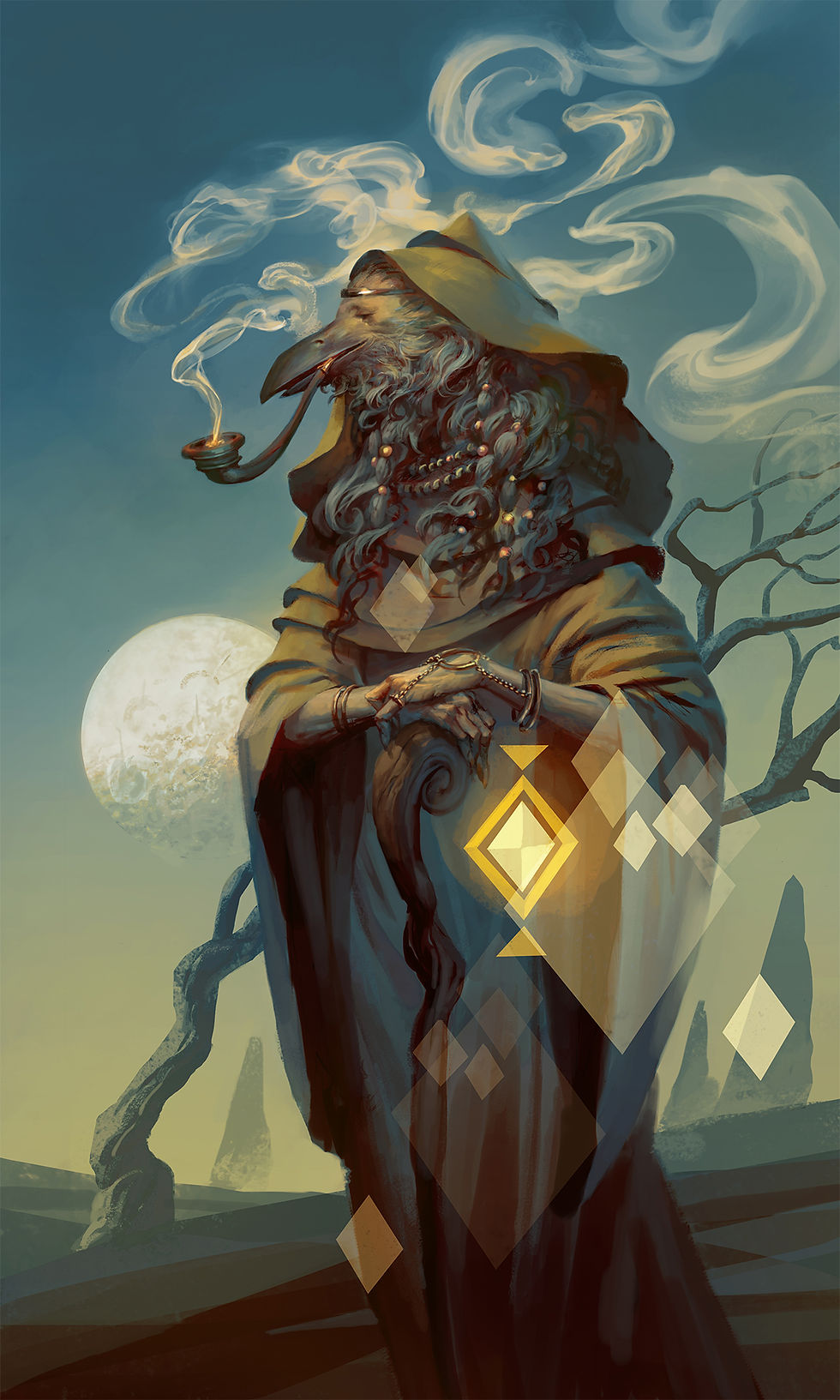
High Humor is not a punchline. It’s soulful, self-deprecating, abyss-laughing levity. The kind that stares into the void, winks, and then lights up another pipe of Phoenix ashes. It is the laughter that remains after God has been slow roasted into the infinite interconnectedness of all things. It is the will to power melted down and recast as the Will to Humor.
Schopenhauer glimpsed it when he saw the world as representation and will, a blind striving that produces suffering as its only reliable fruit. The intellect, for him, could momentarily detach and see the absurdity of it all, the endless wheel of desire, the futility of conquest. Laughter, in that glimpse, becomes a brief emancipation.
Wittgenstein took it further in his later work: language games, forms of life, the way philosophy ties itself into knots trying to say what can only be shown. It’s the ladder you climb and then kick away. High Humor is that kick. It laughs at the attempt to systematize the unsystematizable.
R.A. Lafferty captured the law at the heart of it: levity superseding gravity. Not as denial of weight, but as transcendence through play. Gravity pulls us down; High Humor flips the bird and floats anyway, not because it ignores mass but because it has learned to dance.
Low humor punches down or sideways, never up at its own pretensions. It is the court jester who flatters the king while cutting at everyone else. It reinforces the ego’s brittle walls rather than melting them. Schadenfreude, snark, the eyeroll at earnestness—these are low humor’s currency. They offer temporary superiority without transformation. They leave the one who laughs smaller, caught up in pretense, and trapped by power.
High Humor is the Cosmic Joker. It combines sacred clowning with the Good Joker’s anarchic benevolence and full cosmic joke awareness. The Cosmic Joker knows he’s the punchline and that every punchline is provisional. He builds new gods with genuine reverence, then tears them down with genuine affection when they stiffen into idols. He honors the infinite interconnection by refusing to let any finite form congeal into finality.
Where low humor separates, High Humor connects. It laughs with the fool, the sage, and the abyss. It forces contradiction upon itself so that it never ossifies. It gets power over Power by pivoting, interrogating, meddling, and improvising. It chooses presence over performance, interrogation over gravitation, risk-taking over ritual-making, and genuine subversiveness over inauthentic servitude.
High Humor is a koan with teeth. It does what the best philosophy should: it disturbs your equilibrium in the service of growth. If your “will to power” phase left you with a chest full of medals and a soul burdened from carrying them, this is the ritual to melt it all down. The result isn’t weakness; it’s a lighter, more malleable mettle. Strong enough to bend without breaking and funny enough to laugh at the bending.
Laughter as a Razor:
“The only intelligent tactical response to life’s horror is to laugh defiantly at it.” ~Søren Kierkegaard
High Humor wields laughter like an Ockham’s razor with a fallibilist pommel. Ockham’s razor slices away unnecessary entities and unnecessary seriousness. The pommel is fallibilism: the humble recognition that even the current cut might need sharpening tomorrow. The blade cuts through pride with surgical self-deprecation. It vivisects the petty animal of self-importance. It topples the ivory tower with a lightheartedness that reveals how comically top-heavy it always was.
High Humor mocks Death most beautifully. The Phoenix does not fear the fire; it orders another round of Firebombs and then dives into the inferno. Laughter at Death is defiant affirmation. It stares at the fragility of the human condition and thumbs its nose at the abyss.
Armed with the absolute vulnerability of High Humor, you become humble, open, hungry, daring. The animal transforms into a god; the god back into an animal—forever, laughing at all its forms even as it lives through them.
The Cosmic Joker grins through the haze. Levity supersedes gravity. The contradiction holds you together by refusing to let you congeal. High Humor is not the end of the path. It is the path itself: ever-burning, ever-rising, forever forcing yourself to contradict yourself so that you never conform to yourself.
Image source:
About the Author:
Gary Z McGee, a former Navy Intelligence Specialist turned philosopher, is the author of Birthday Suit of God and The Looking Glass Man. His works are inspired by the great philosophers of the ages and his wide-awake view of the modern world.
This article (High Humor: A Phoenix Smoking the Pipe of its Own Ashes) was originally created and published by Self-inflicted Philosophy and is printed here under a Creative Commons license with attribution to Gary Z McGee and self-inflictedphilosophy.org. It may be re-posted freely with proper attribution, author bio, and this statement of copyright.
Comments